Cloud Rent in Action: How €50 Turns Into €200+
· 2 min read
When you pay for cloud hosting, you're not just paying for compute. You're paying rent. And it adds up fast.
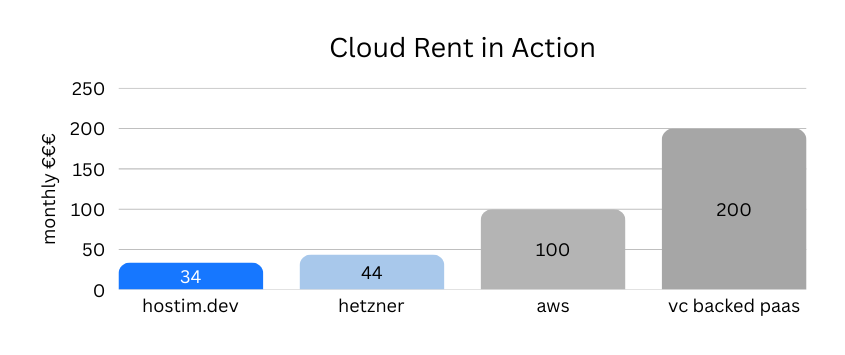
When you pay for cloud hosting, you're not just paying for compute. You're paying rent. And it adds up fast.
Building a PaaS as a solo founder means making choices. Some deliberate, some accidental, all of them tradeoffs.
Every tool comes with pros and cons, and the deciding factor is usually the most expensive resource of all: time.
If I can get the job done with something I already know, I'll take that path. I'll learn new tools when the project pays for it. Until then, it's all about moving forward with what works.
Here's how Hostim.dev is put together today – the stack that runs every app, database, and service behind the scenes.
Most side projects start the same way.
You grab a VPS from Hetzner or DigitalOcean, install Docker, run docker compose up, and boom – you're live.
It feels cheap. It feels simple. Until it isn't.
You've got a working docker-compose.yml, and now you want to put it online.
Maybe it's a SaaS side project. A personal site. A dashboard for a client. Whatever it is – you're here because you want to host a Compose app, and you don't want to spend hours fiddling with YAML, CI pipelines, or Kubernetes manifests.
Let's walk through what it really takes to host a Docker Compose project on your own. And then I'll show you what I built to make this process go away – for myself and anyone else who's tired of copy-pasting configs.