
Caddy vs HAProxy vs Nginx vs Traefik: Which Reverse Proxy to Pick (2026)

· 7 min read

Short answer: HAProxy is the fastest, Caddy is the easiest, Traefik is the best fit for containers, and Nginx is the safest default. All four terminate TLS and reverse proxy well; the choice comes down to how your services change and how much config you want to own. Below: each proxy in detail, every head-to-head pairing, and a performance ranking.
Netlify Credits Explained: How They Work and When They Reset (2026)

· 9 min read

Netlify credits are a prepaid usage unit: builds, bandwidth, and function calls all draw from one balance instead of being billed as separate metrics. Monthly plan credits reset at the start of each billing cycle — the day of the month your team account was created, not the 1st — and unused monthly credits do not roll over, unless you are on a Pro plan with 5,000 or more monthly credits. Credit packs and auto-recharge credits never expire. When the balance reaches zero, every project on the account pauses until the next cycle starts.

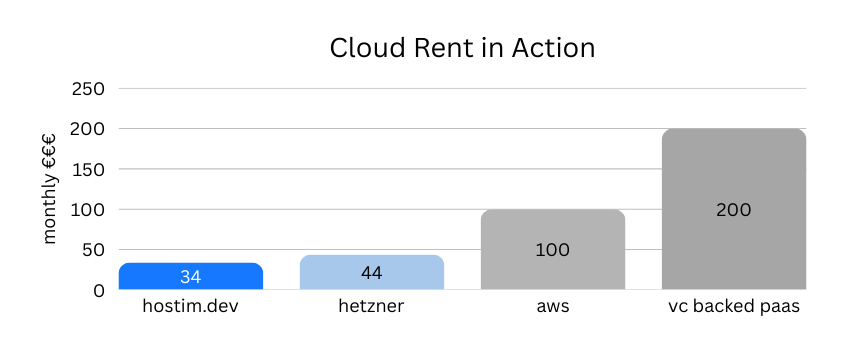
📌 Last week, I wrote about Cloud Rent in Action – how layers of middlemen drive up the cost of running a simple SaaS stack. Netlify's new pricing update feels like the same story, playing out live.

How We Built a PaaS with Go, Kubernetes, and React

· 5 min read

Building a PaaS as a solo founder means making choices. Some deliberate, some accidental, all of them tradeoffs.

Every tool comes with pros and cons, and the deciding factor is usually the most expensive resource of all: time.

If I can get the job done with something I already know, I'll take that path. I'll learn new tools when the project pays for it. Until then, it's all about moving forward with what works.

Here's how Hostim.dev is put together today – the stack that runs every app, database, and service behind the scenes.

How to Self-Host a Docker Compose App

· 7 min read

You've got a working docker-compose.yml, and now you want to put it online.

Maybe it's a SaaS side project. A personal site. A dashboard for a client. Whatever it is – you're here because you want to host a Compose app, and you don't want to spend hours fiddling with YAML, CI pipelines, or Kubernetes manifests.

Let's walk through what it really takes to host a Docker Compose project on your own. And then I'll show you what I built to make this process go away – for myself and anyone else who's tired of copy-pasting configs.

Why I'm Building Hostim.dev

· 3 min read

These days, hosting your app often means choosing between complexity, lock-in, and sky-high pricing. Whether it's a shiny new platform or a slick developer tool, most of them are just wrappers around the same old giants: AWS, GCP, and Azure.

And those giants are expensive by design.